
Why do most partnerships fail?
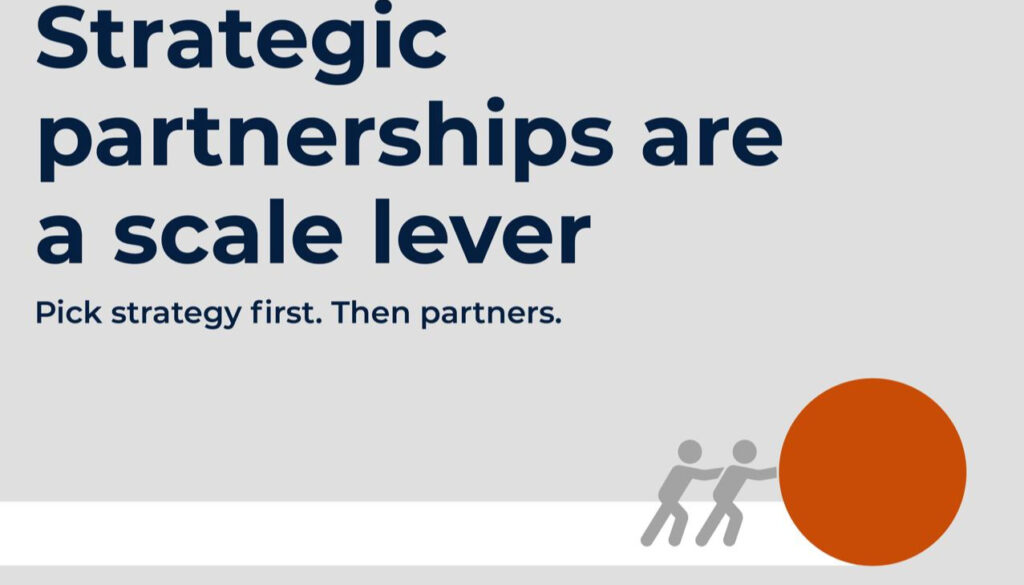

In conversation with partnerships expert Tom Harker (@tomharker)
We’ve spent 15+ years building partnerships, with partners ranging from boutique consultancies to the largest professional consulting firms in the world. The pattern we see repeatedly? Companies treat partnerships as a side project—something sales can “handle when they have time,” or marketing can “manage with a few co-branded webinars.”
The result? Partnerships that generate activity but not revenue. Relationships that consume resources without multiplying results. Investments that create initial bursts of output, without long-term ROI.
What High-Performing Partnerships Actually Do
The best partnerships I’ve built had one thing in common: they turned an upfront investment into ongoing leverage. I’d spend weeks aligning with partners—training their team on our methodology, building their pitch materials, and establishing clarity around how an integration of our products and services magnified their own market offer. Successful partnerships weren’t additive (which generally fosters transactional relationships), but integrative, where the partner’s primary offer remained the partner’s, with our offer multiplying the legitimacy of their total package. As an embedded (versus optional) offer, adoption across the organization becomes frictionless, and it becomes a logical inclusion with every client engagement, rather than feeling like an optional bolt-on solution.
That’s the fundamental shift: moving away from partnerships where your product is only positioned as a possible option, towards integrated partnerships, where the removal of your offer fundamentally changes the value proposition for their clients. When you get this right, the partnership is positioned for scale and you gain access into the breadth of your partner’s client relationships. While there’s bound to be some overlap, partners are intrinsically connected into otherwise inaccessible clients (due to expertise, geography, language, or network).
Three Things Partnerships Deliver That Your Sales Team Can’t
1. Borrowed trust accelerates every deal
When a prospect gets introduced through a trusted advisor or existing vendor, you skip the credibility-building phase entirely. Deals that would normally take six months close in six weeks—because a trusted consulting partner vouched for our product, effectively bypassing a required vetting conversation mandatory in a direct sale. Their reputation becomes our shortcut. Their access is access we might never get, directly.
2. Your investment scales through their network
Train one partner’s team of consultants, and suddenly you have twenty people who can speak fluently about your value proposition. That same training investment through your own sales team would require twenty separate hires. The difference? Partners bring their existing client relationships, their industry credibility, and their local market knowledge—things you’d spend years building yourself.
3. Strategic partnerships signal market position
Who you partner with tells the market where you play and bolsters your credibility. For example, it’s one thing to successfully sell your product through an online portal, but when consumers see it on the shelves of their favorite retailer, there’s a big upward shift in the legitimacy of your offer when they see you’ve been independently vetted by trusted outlets. The same is true in consulting, and that signal opens doors that your own marketing never could.
What Separates Effective Partnership Leaders
After managing partnerships at the executive level for years, we can tell you what actually matters: the ability to see the system, not just the deal.
Weak partner strategists chase every opportunity. They sign partner agreements that look impressive but generate nothing. They measure activity—number of partners signed, co-marketing events held—while revenue stays flat. Partners leave frustrated.
Strong partnership leaders do three things differently:
They qualify ruthlessly. Not every potential partner deserves your time. The best partners have established client relationships, credible market position, and—most importantly—economic incentive to embed your solution. High profile businesses don’t always indicate worthwhile partnerships—if customers don’t understand the rationale for the partnership, it can even harm your brand, so be extremely deliberate in defining your ideal partner profile before responding to new partnership requests.
They design for the partner’s success, not just their own. This means understanding what your partner needs to win with their clients. How you sell to your direct customers may not fit the value proposition your partner makes. If your solution doesn’t make your partner more successful, the partnership will stall regardless of the contract terms. Identify how you can adjust your offering (overall, or via alternative options) to remove roadblocks that get in the way of partner integration.
They think like operators, not dealmakers. The partnership agreement is the starting point, not the finish line. You need enablement materials. Training programs. Joint account planning. Regular business reviews. This operational infrastructure is what transforms a signed agreement into actual revenue (and ensures a feedback loop around partner needs).
The $5M Mistake Most Companies Make
I’ve watched this pattern destroy potential partnerships dozens of times: companies treat partnerships as a part-time responsibility. Sales is supposed to “manage” partners when they’re not hitting their own quota. Marketing is supposed to “activate” partners while running three product launches. Partners are just expected to buy, but there’s an unwillingness to make changes that would best serve their needs.
Here’s what that actually looks like: partner agreements get signed, initial meetings happen, then… nothing. Partners stop responding because there’s no one driving the relationship forward. Opportunities get missed because your business prioritizes direct deals over partner success. Partner enablement never happens (because no one owns it or your firm is unable—or unwilling—to respond to partner feedback).
The companies that win with partnerships staff it like they mean it—with dedicated leadership, clear ownership, and resources to actually execute. Not because it’s nice to have, but because half-hearted partnership efforts waste everyone’s time and damage relationships with the exact organizations you need to grow.
Why Latin America Requires a Different Approach
Building partnerships in Latin America adds layers of complexity that catch many companies off-guard. I’ve seen US and European firms try to replicate their North American partnership playbooks in LATAM, without long-term success.
The mistakes are predictable: they assume their existing practices will work everywhere. They underestimate how much legal frameworks, business practices, and relationship dynamics vary by country. Most critically, they think they can manage LATAM partnerships remotely, without on-the-ground operators who actually know the market and culture and who will deepen the human connection.
This is where Inti comes in. We help companies build partnership functions that actually work in Latin America—leveraging global approaches but then overlaying a clear understanding how business gets done locally. That means:
- Identifying which partnership models make sense for your solution
- Qualifying partners who have real client relationships (not just impressive LinkedIn profiles)
- Structuring incentives, roles, and governance that align with how business actually gets done locally
- Building the operational infrastructure that turns signed agreements into revenue
If your partnerships in LATAM feel stalled, overly dependent on one or two relationships, or consistently underperform expectations, that’s a signal they need dedicated ownership and local market expertise—not another partnership agreement.
If You’re Serious About Partnerships
Whether you’re building partnerships in Latin America or around the globe, feel free to connect with us (@tomharker and @diegomontes) with questions. We’d be happy to explore what effective partnership looks like in your business.
Talk to an expert for free!