
Greenfield vs. Brownfield in Latin America: A Practical Playbook for Supply Chain Expansion
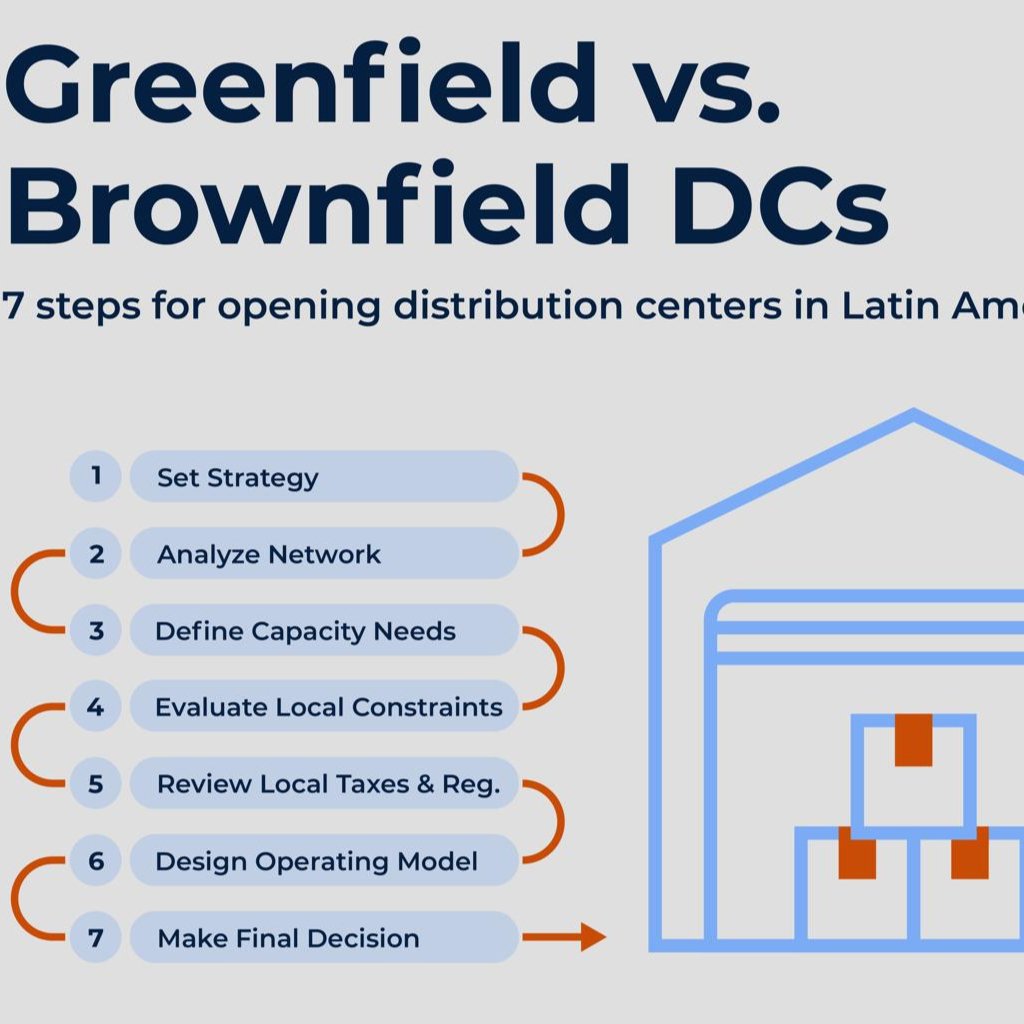
A supply chain expansion in Latin America succeeds or fails long before the first shovel hits the ground, or the first lease is signed. This playbook walks through the practical steps we use with clients who are deciding between a greenfield build and a brownfield conversion, so the decision is driven by data rather than instinct.
The stakes are high: a poorly planned supply chain expansion in Latin America can lock a company into years of excess cost, service failures, or a facility that no longer matches demand within eighteen months of opening. We have seen both outcomes play out across manufacturing, retail distribution, and industrial clients moving into Mexico, Brazil, Chile, and Colombia. The difference between the two outcomes is rarely luck. It almost always traces back to whether the team followed a structured process, like the one below, or made the site decision on gut feel and a single site visit.
Step 1: Define Your Supply Chain Expansion in Latin America Criteria
Before comparing specific sites, every successful supply chain expansion in Latin America starts with a written set of non-negotiables: target throughput, service-level requirements, proximity to customers or ports, headcount needs, and a budget ceiling. Skipping this step is the single most common reason companies end up comparing sites that were never truly comparable in the first place.
Step 2: Run a Site Selection Scorecard
Once criteria are set, score each candidate site, greenfield or brownfield, against the same weighted factors:
- Total landed cost (land or lease, construction or retrofit, permitting)
- Proximity to highways, ports, and your customer base
- Local labor market depth and wage trends
- Available government incentives or free-trade-zone status
- Utility capacity: power, water, and connectivity
- Realistic permitting and construction timeline
A rigorous supply chain expansion scorecard usually reveals that greenfield and brownfield options serve different strategic goals: brownfield favors speed to market, while greenfield favors long-term flexibility and a lower total cost of ownership.
Step 3: Stress-Test the Timeline
Timelines are where most supply chain expansion plans in Latin America go wrong. Brownfield retrofits can look faster on paper, but hidden structural issues, environmental remediation, or utility upgrades routinely add months. Greenfield builds have a longer baseline timeline but fewer surprises once permits are in hand. Build a realistic timeline with contingency buffers for both permitting delays and construction, and validate it against comparable projects completed in the same country.
Step 4: Model Total Cost of Ownership, Not Just Capex
A common mistake is comparing only upfront capital cost. A complete supply chain expansion model should include five-to-ten-year operating costs: energy efficiency, maintenance, labor productivity, and the cost of any operational disruption during a brownfield transition. Understanding total cost of ownership this way often flips the initial preference between the two options.
Step 5: Plan the Transition and Ramp-Up
Whether you choose greenfield or brownfield, the ramp-up plan deserves as much rigor as the site selection itself. Define a phased hiring plan, a systems cutover plan for your WMS and ERP integration, and a customer communication plan for any service disruption. Companies that treat ramp-up as an afterthought routinely lose the time advantage they gained by choosing the faster site option.
Common Pitfalls to Avoid
- Comparing sites against different criteria instead of one weighted scorecard
- Underestimating permitting timelines in unfamiliar jurisdictions
- Ignoring hidden brownfield costs like environmental remediation
- Failing to model total cost of ownership beyond year one
- Starting ramp-up planning only after the site is already chosen
Supply Chain Expansion in Latin America: How Inti Consulting Can Help
At Inti, we help companies run this exact supply chain expansion process end-to-end across Latin America, from scorecard design through ramp-up execution. If you are still working through the fundamentals of the decision itself, our companion piece on choosing between greenfield and brownfield warehouses is a useful starting point, and our team can also help you think through nearshore talent for the ERP and systems side of the transition. Contact us to build your site selection scorecard and timeline.
Talk to an expert for free!